The weak point
Why built-in refrigerator lines fail, and why a built-in install hides it longer
Many installers still use a saddle valve, a clamp-on fitting with a small spike that pierces the supply pipe without cutting it. It installs fast, which is why it turns up frequently in Michigan kitchens remodeled over the last twenty years, built-in setups included.
Most manufacturers advise against piercing-type saddle valves, since they cut flow and clog more readily than a proper valve installed on a drilled and tapped connection. The gasket inside that valve is the real failure point, hardening and losing its seal after years of hot-cold cycling. The resulting leak is often a slow weep at the valve body rather than at the fridge end, which lets it run longer unnoticed behind a built-in unit than behind a standalone one.
A built-in, paneled refrigerator sits flush against cabinetry on both sides, often with a custom panel matching the surrounding cabinets. That same tight, flush fit also means a leak has nowhere to spread sideways, only straight down into the cabinet base and the floor beneath, with no visible gap to catch it early.
Flooring
What a leak does to hardwood or stone near a built-in unit
Solid hardwood around a built-in refrigerator can sometimes be dried in place if caught inside roughly 48 hours and cupping is still minor. Cupping occurs because the board's underside swells on contact with water while the top face stays dry, raising the plank edges relative to the center.
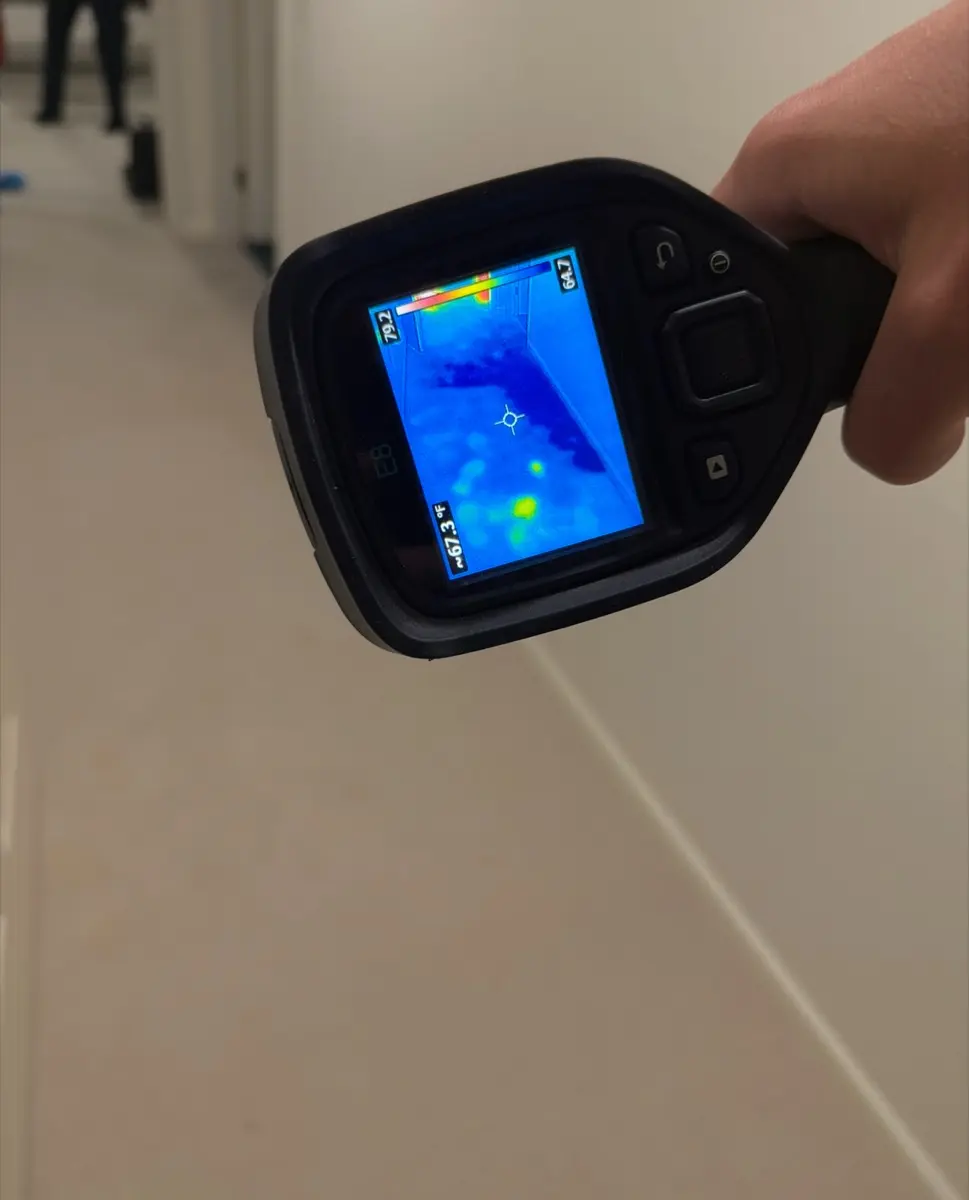
Stone or tile flooring is not harmed by the water itself; the exposure is in the grout lines and the subfloor below, which we test with moisture meters before deciding whether the tile stays.
Engineered hardwood and laminate hold up worse. Engineered flooring's plywood core delaminates once saturated, and laminate's fiberboard core swells permanently on contact with water, so both are generally treated as a replacement rather than a dry.
| Flooring type | Caught within 48 hours | Wet for longer |
|---|---|---|
| Solid hardwood | Often saveable with in-place drying | Cupping deepens, replacement more likely |
| Engineered hardwood | Still at risk once saturated | Core delamination, usually replaced |
| Stone or tile | No damage to the material itself | Grout and subfloor checked either way |
| Laminate | Core swells permanently on contact | Same, replacement standard |
Cabinetry
Does the custom cabinet around a built-in fridge have to be torn out?
The side panels and toe kick directly beside a built-in refrigerator are typically particleboard or MDF even in a high-end install, and that material swells permanently once saturated, so it is usually replaced regardless of cabinet brand.
The adjacent cabinet boxes, when built from solid wood or plywood, often come through intact if the water did not sit long enough to break down the glue joints. We check with moisture readings and, where needed, a small inspection hole before deciding what comes out, the same bar we apply to any custom kitchen.
Insurance
Does a homeowners policy cover an ice maker line leak?
A homeowners policy commonly covers sudden and accidental water damage. The carrier decides, after its own inspection, whether a given claim fits that definition.
A line that fails all at once and dumps water for an hour before being noticed reads very differently to an adjuster than one that has been weeping for weeks behind a tight built-in installation. Long-term staining or deep cupping that only develops over time can push a claim toward a seepage exclusion rather than sudden-and-accidental coverage, which is why documenting from the first hour matters.
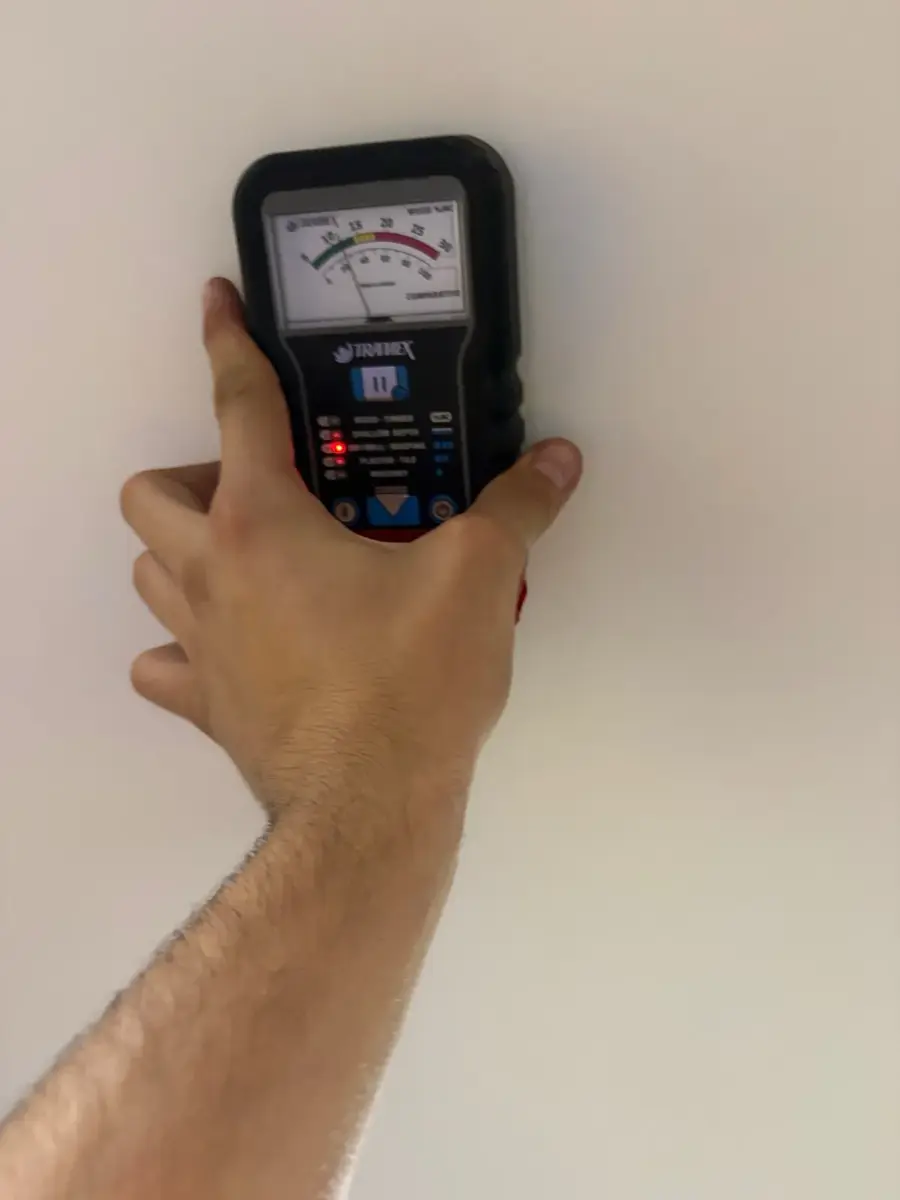
We photograph the line, the fitting, and the moisture pattern across the floor and cabinetry, and write up exactly what we measure. Coverage determinations and settlement amounts rest with your insurance carrier alone.
Below the kitchen
What happens above a finished basement?
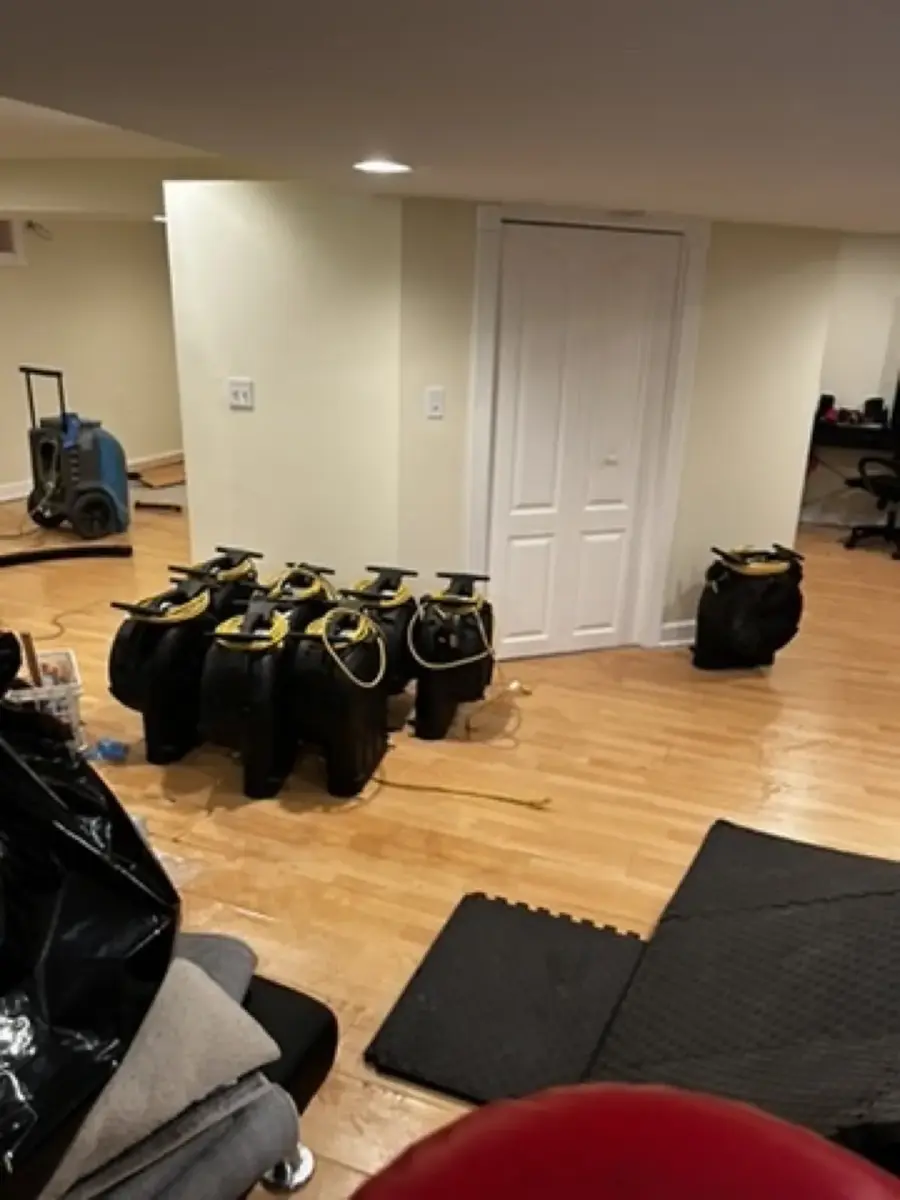
Standing water that finds a subfloor seam near a built-in unit soaks into the plywood plies, which begin delaminating after a day or two even when the surface still looks intact. In a home with a finished basement under the kitchen, that water eventually drops into the ceiling cavity below and surfaces as a stain or soft spot, sometimes in a location that seems unrelated to the kitchen until the joist line is traced.