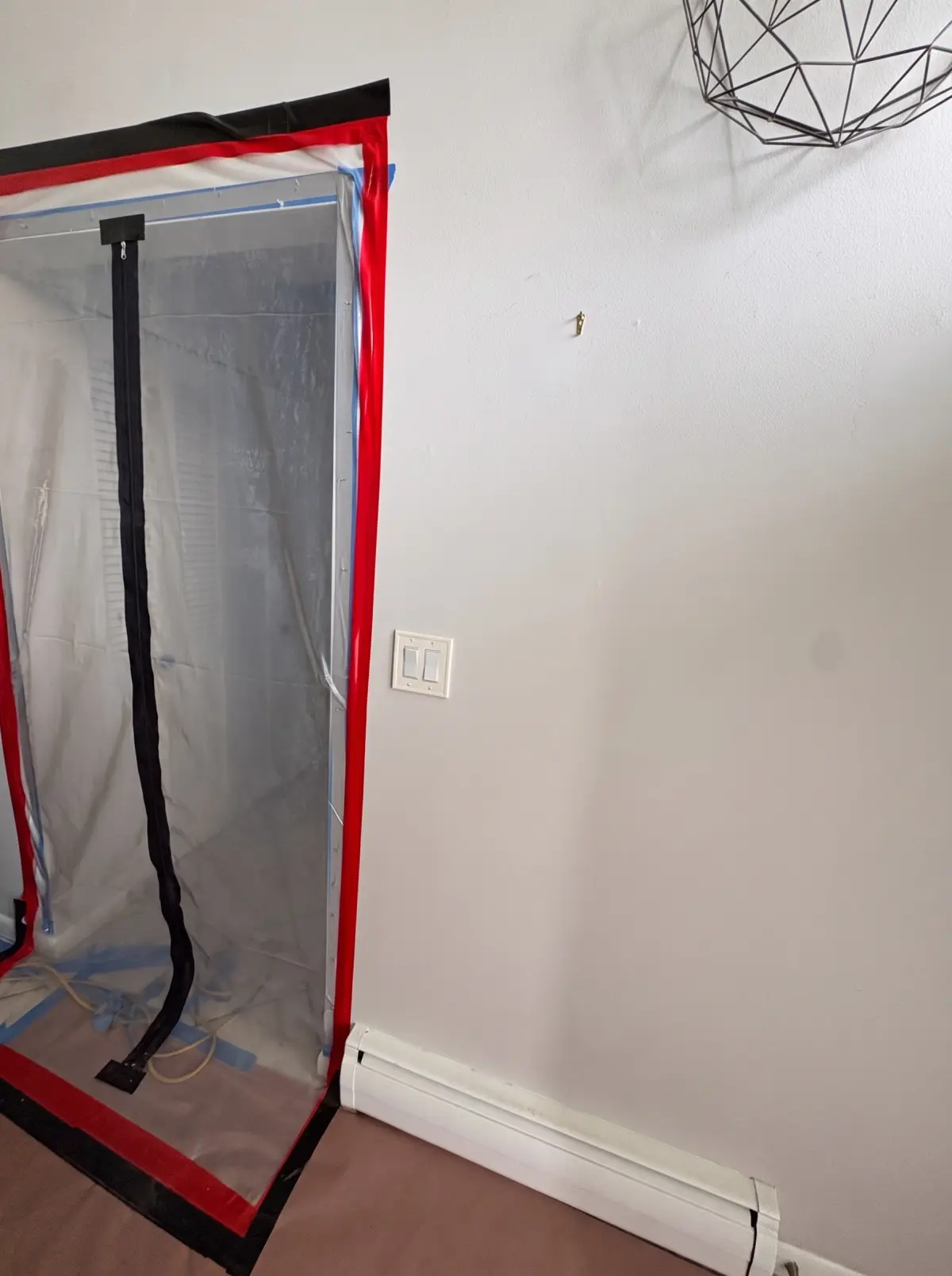
The sudden event
An overflow upstairs reaching a plaster ceiling below
A full tub holds somewhere between 40 and 80 gallons, and a faucet left running past that point keeps adding water faster than the overflow opening and drain can move it together. Once it tops the rim, water spreads across the bathroom floor and seeks the lowest point, usually the seam where the tub meets the wall or floor.
In an older Birmingham or Bloomfield Township home with plaster below, that water behaves differently than it would over drywall. Plaster bonds to wood or metal lath through small plugs called keys, and water breaks that bond at the keys first. A ceiling that still looks solid from below can already have failed keys, which means it can come down in a section rather than announce itself with a slow drip.
Many of these homes also carry original or restored millwork, crown detail, and plaster medallions in the rooms beneath an upstairs bath, and those details change how a repair gets planned. A damaged section of plaster next to an intact medallion is not simply cut square and patched with drywall.
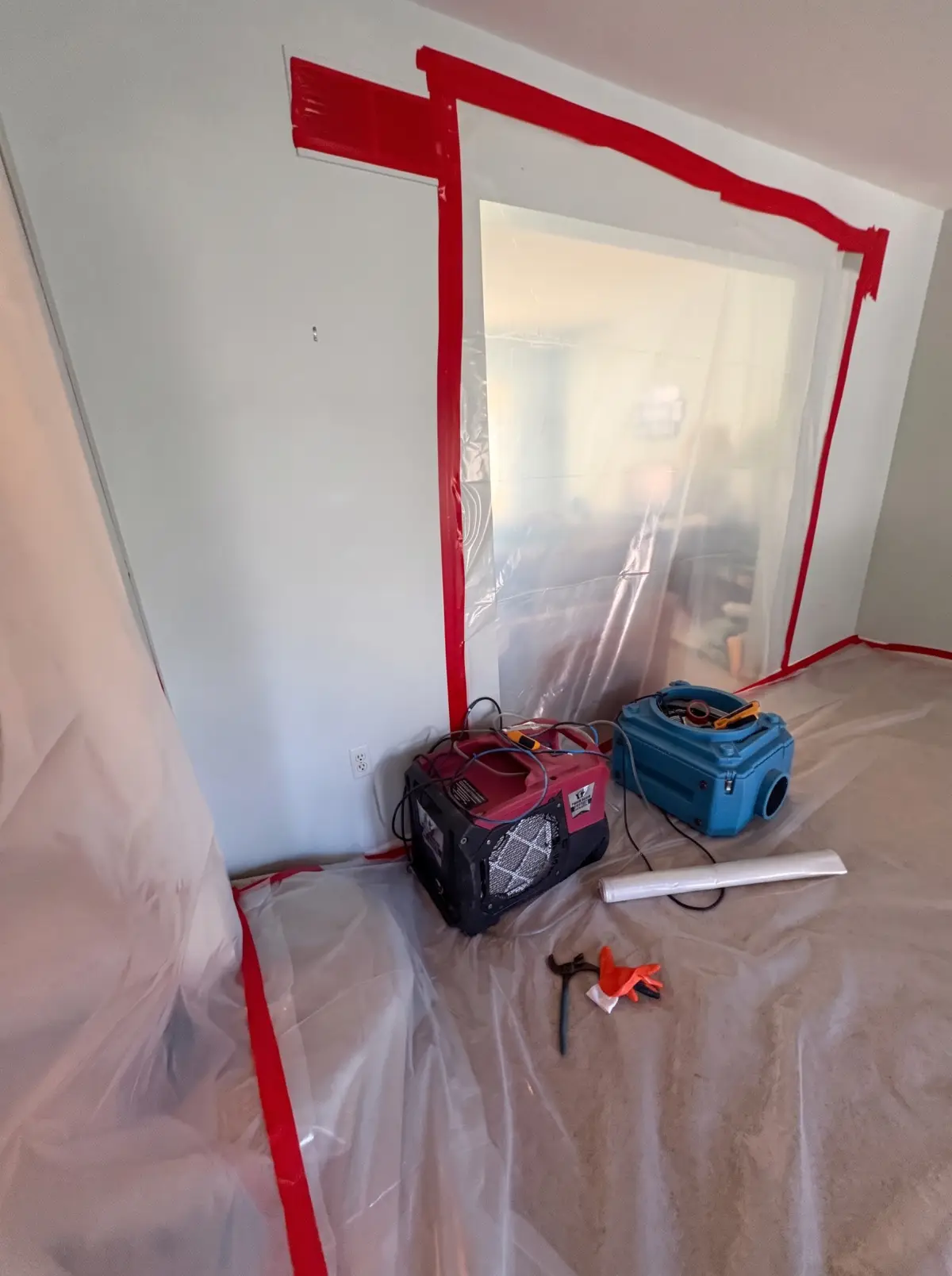
The slow failure
A shower pan leak, and why it goes undetected so long
The pan underneath the tile is the waterproof layer standing between a normal shower and the floor assembly. When the liner, the drain seal, or the tile and grout above it gives out, a small amount of water bypasses the surface with every single shower, rather than running down the drain as intended.
Plumbing code commonly requires a pan liner to hold standing water for at least 24 hours before tile ever goes over it, which is a real bar to clear. A liner that fails after passing that test does not announce itself in the bathroom. The first clue is usually the ceiling below, or a loose or hollow-sounding tile, appearing weeks or months after the actual failure.
Coverage
Do carriers treat an overflow and a pan leak the same way?
A homeowners policy commonly covers sudden and accidental water damage. The carrier decides. An overflow with a clear cause and a clear start time usually matches what a carrier means by sudden.
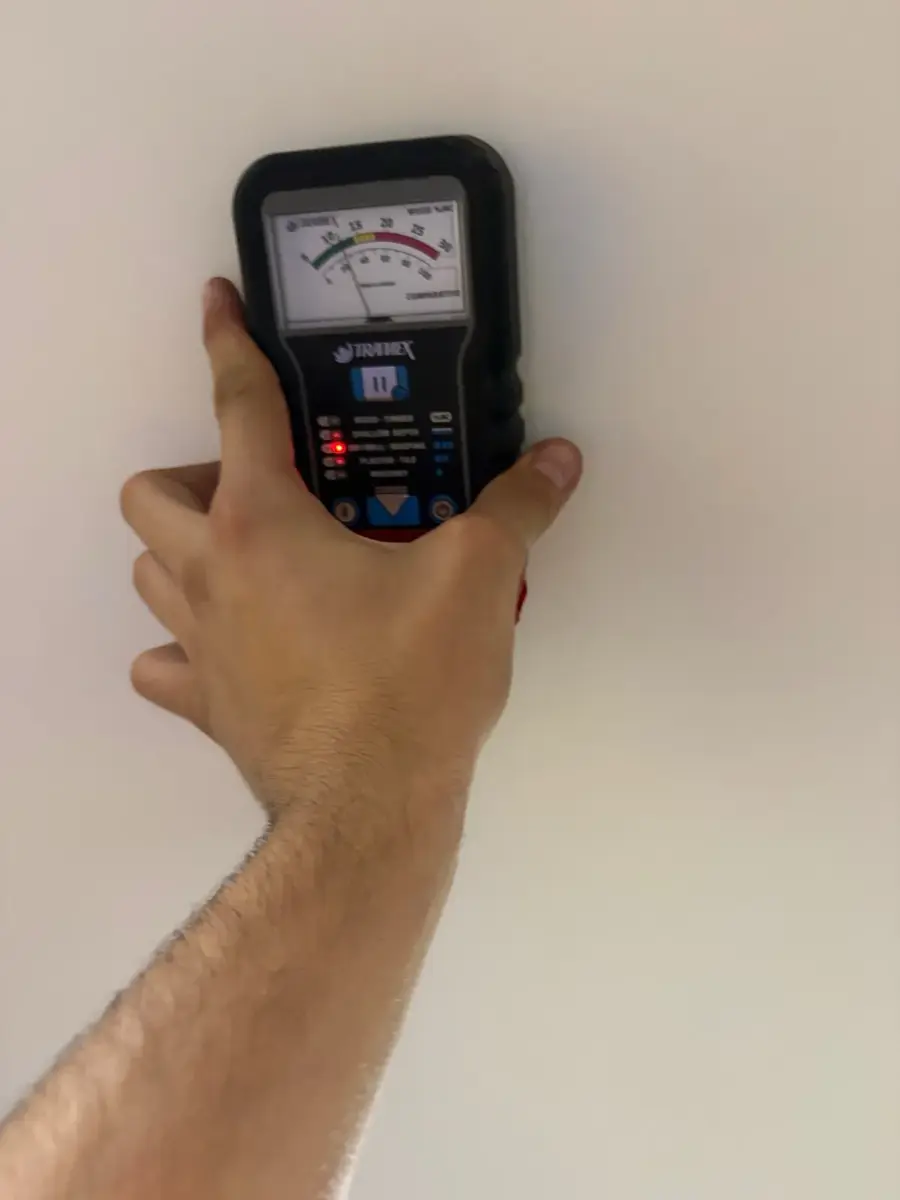
A shower pan leak is a different pattern most of the time. It ran unnoticed for weeks or months, which puts it closer to the long-term seepage that standard policies commonly exclude. The carrier weighs how long the condition existed and whether there is a record of prior staining or repeat repairs. We document exactly what we find, with photos and readings, but coverage decisions and settlement amounts rest entirely with your carrier.
An overflow has a date you can point to. A shower pan leak usually does not, and that gap is exactly what a carrier is checking for.
What comes out
Deciding what to remove from a plaster ceiling and what to dry
Moisture readings drive this decision, not appearance. A plaster section that tests wet at the keys and has separated from the lath comes out, because a detached section is a safety concern, not a cosmetic one. Plaster that reads dry stays, even near an obviously stained area.
Millwork and crown detail near the damaged zone get their own check. Painted wood trim typically survives if it was never standing in water, and the repair boundary gets drawn around existing trim rather than through it whenever the readings allow it.
| Tub overflow | Shower pan leak | |
|---|---|---|
| Onset | Faucet left running, overflow outpaced | Failed liner, cracked grout or tile, or a leaking valve |
| Discovery | Immediate, water visible on the floor | Delayed: a ceiling stain, loose tile, or a plaster crack |
| Plaster below | Keys can fail quickly if water sat before discovery | Keys weaken gradually over the leak's whole lifespan |
| Carrier treatment, generally | Often treated as sudden and accidental | Often treated as gradual, commonly excluded |
| Nearby millwork | Usually dry unless directly under the saturated zone | Risk scales with how long the leak ran undetected |