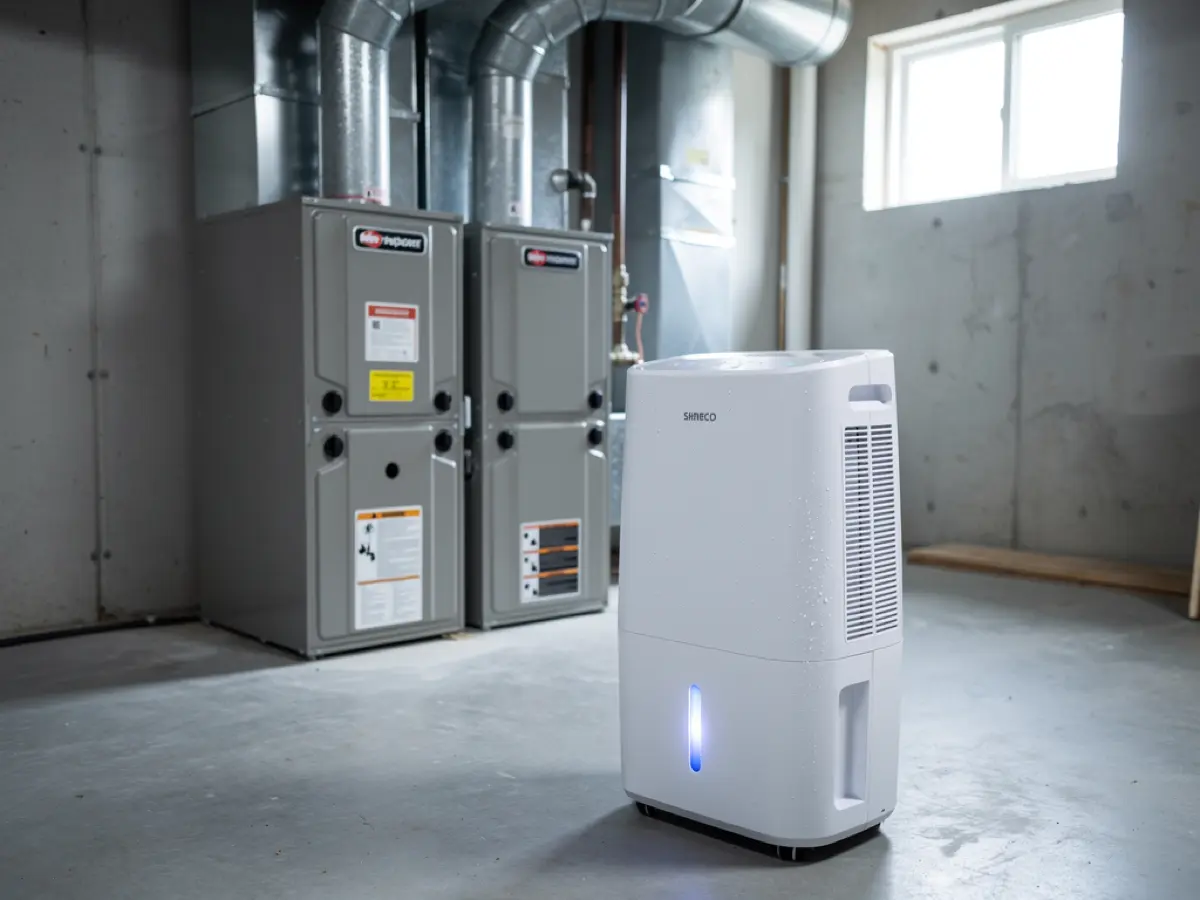
What is actually at stake
What a failed pump reaches in a finished Bloomfield-area basement
An unfinished basement loses a water heater, stored boxes, and floor-level framing. A finished lower level in a high-value Oakland County home stands to lose far more, far faster: engineered or solid hardwood, stone tile at a wet bar, built-in cabinetry, a home theater with floor-height electronics and speaker cabinets, and a wine cellar where humidity and temperature control matter as much as the water itself.
Water from a failed pump climbs from the floor, which means whatever sits lowest, flooring, baseboard, cabinet bases, and anything stored at floor level, takes the worst and earliest damage. A theater riser or a built-in wine rack sits exactly at that height.
Outside our lane
The pump is a plumber's job; the finished space is ours
Repairing or replacing the pump, the check valve, the float, or the discharge line is licensed plumbing work, and we stay out of it entirely. If you want detail on battery backup sizing, horsepower, check valve failure, or discharge freeze-back prevention ahead of the next storm, that is covered in depth on our sump pump hardware and prevention page.
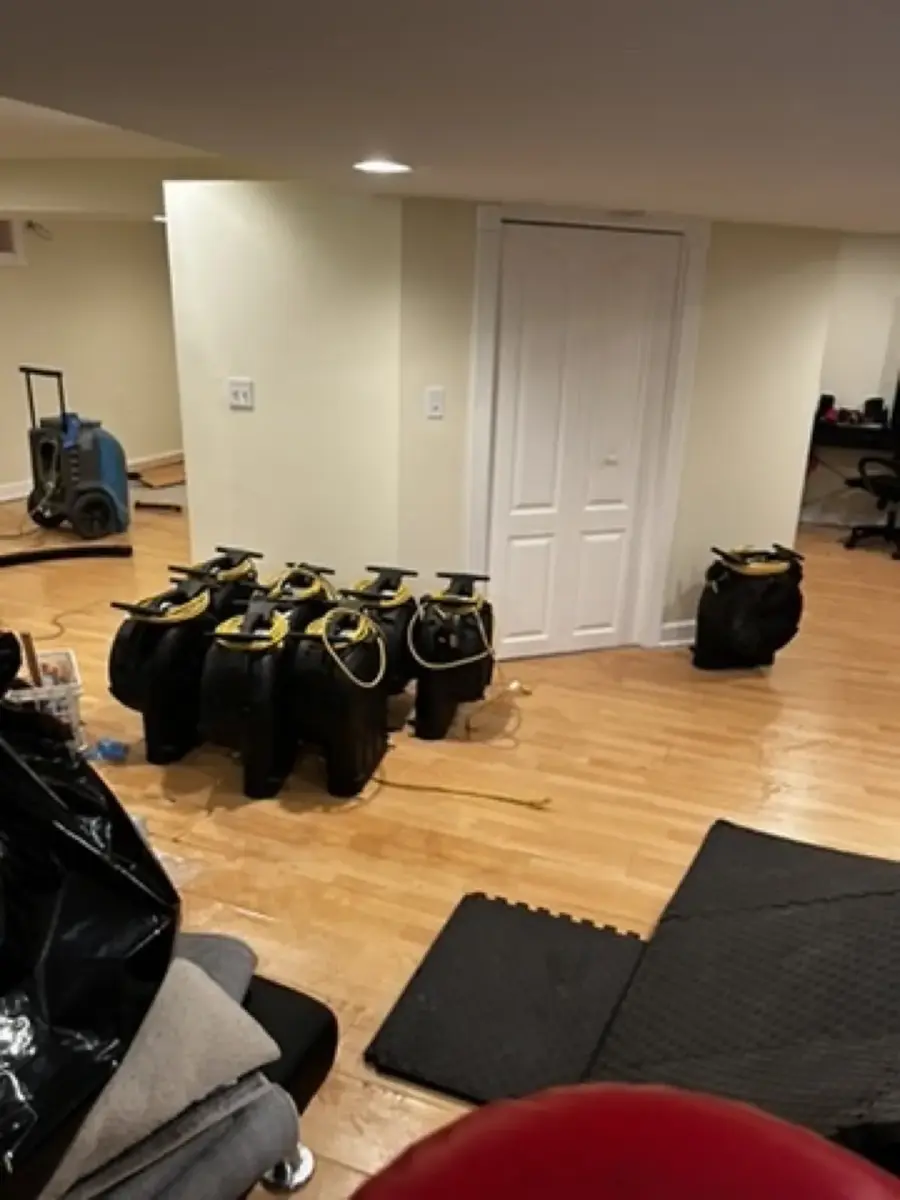
Our scope is everything the water touched: extraction, mapping moisture across hardwood, stone, and cabinetry, and a drying plan built around what can realistically be saved rather than a reflexive strip-out of the whole level.
Coverage
Is sump pump failure covered by homeowners insurance?
A homeowners policy commonly covers sudden and accidental water damage. The carrier decides. Sump pump failure gets different treatment. Michigan's Department of Insurance and Financial Services has stated plainly that damage from a failing sump pump, similar to sewer backup, is typically excluded under a standard policy.
The remedy is a water backup endorsement, which restores coverage for an overflowing pump or a backed-up sewer or drain. It comes with its own, smaller cap, separate from the dwelling limit, and that cap varies by policy. On a finished basement with a wine cellar or theater, that cap can be reached faster than on a bare concrete floor, which is worth knowing ahead of a claim, not after one.
Check your own declarations page for your actual endorsement and limit. Only the carrier decides a claim.
The freeze nobody expects
Failure without a storm or an outage
Most people assume failure means a storm and a dead grid. A common Michigan winter failure happens with power on the whole time. The discharge line runs above grade across the yard, well above the roughly 42-inch frost depth Michigan code requires for footings, so that exposed run freezes solid during a cold snap long before the deeper ground ever would.
Once the line is frozen, the pump keeps cycling because the float still sees water in the pit. With nowhere for the water to go, the motor overheats fighting the blockage and burns out. The basement does not flood until the thaw, so the pump looks like it simply died, with no visible trace of the freeze that actually killed it a week before.
Water classification
Is sump water clean, and does that change the plan?
Groundwater from a sump pit that handles nothing else is normally Category 1, the cleanest tier, which gives the widest margin to dry hardwood, stone substrate, and cabinetry instead of removing it outright. A few days of standing water, or a check valve failure that lets contaminated water into the pit, changes that.
Classification shifts with time, which is exactly why speed matters even on a clean groundwater event. A theater or wine cellar where equipment arrives within the first day keeps a meaningfully better shot at its flooring and millwork than one discovered after a weekend away.
| Material | Response within a day | Standing water for several days |
|---|---|---|
| Engineered hardwood | Often saveable with mat drying in place | Core delamination risk climbs sharply |
| Stone tile (wet bar, theater riser) | Tile unaffected; grout and substrate checked | Substrate checked for softening |
| Custom millwork and wine racks | Usually dried in place if solid wood | Melamine or particleboard components often replaced |
| Theater electronics and carpet | Carpet and pad removed regardless; electronics assessed separately | Same, with more corrosion risk on contacts |
| Drywall and insulation | Flood-cut only where wet, 12 to 24 inches above the line | Larger flood-cut, insulation replaced |